Introduction
The wine industry is one of the most distinctive sectors of the global food and beverage market. It combines agricultural production, industrial processing, international trade, tourism, culture, gastronomy and consumer marketing. Unlike many other consumer products, wine is strongly associated with geographical origin, tradition, authenticity, quality, lifestyle and personal experience. These characteristics make wine marketing particularly complex and require businesses to develop strategies that go beyond conventional product promotion.
Wine producers and distributors operate in an increasingly competitive environment in which consumer preferences, economic conditions, technological developments and international trade influence purchasing decisions. The success of a wine business therefore depends not only on the quality of its products but also on its ability to understand the market, identify appropriate consumer segments, establish a recognisable brand and build long-term relationships with customers.
Marketing plays an essential role in connecting wine producers with consumers. It involves market research, product positioning, pricing, distribution, communication, public relations, advertising, promotional activities and customer relationship management. Effective marketing allows wine businesses to differentiate their products, communicate their value and strengthen their competitive position.
This article examines the fundamental characteristics of the wine market, its size and structure, market segmentation, competition, barriers to entry, marketing mix, consumer satisfaction, marketing planning, reputation management and the principal trends influencing the development of the wine industry.
1. Definition of the Wine Market
The wine market can be defined as the economic environment in which wine is produced, distributed, marketed, purchased and consumed. It includes all individuals, organisations and institutions involved in the production and commercialisation of wine, from vineyards and wineries to wholesalers, retailers, restaurants, wine shops, online platforms and final consumers.
The wine market is part of the broader alcoholic beverage industry, but it has several specific characteristics that distinguish it from other beverage markets.
First, wine production depends heavily on natural conditions. Climate, soil composition, grape varieties, geographical location and weather conditions influence the characteristics and quality of the final product. Consequently, wine production is closely connected to the concept of terroir, which refers to the combination of natural and human factors that give a wine its distinctive identity.
Second, wine is a product with strong cultural and symbolic associations. Consumers may purchase wine not only for its taste but also because of its origin, history, reputation, prestige or association with particular occasions.
Third, wine is a highly differentiated product. Differences in grape varieties, production techniques, ageing processes, geographical indications, brands and price categories create a wide range of products available to consumers.
The wine market is also international. Wine-producing countries export their products to markets around the world, while consumers increasingly have access to wines originating from different continents.
The main participants in the wine market include:
- Wine producers: Vineyards, wineries and wine-growing cooperatives responsible for producing wine.
- Distributors and importers: Businesses that purchase wine from producers and supply domestic or international markets.
- Wholesalers and retailers: Organisations that sell wine to restaurants, wine shops, supermarkets and other businesses.
- Hospitality businesses: Restaurants, hotels, bars and wine tourism establishments.
- Consumers: Individuals who purchase wine for personal consumption, social occasions, gifts or collecting.
- Marketing and communication agencies: Organisations providing branding, advertising, public relations and promotional services.
The wine market is therefore a complex network of economic relationships in which product quality, distribution efficiency, brand reputation and consumer preferences determine commercial success.
2. Size and Structure of the Wine Market
The global wine market represents a significant economic sector, although its development has been affected by changing consumption patterns, inflation, production costs, climate change and geopolitical uncertainty.
According to the International Organisation of Vine and Wine (OIV), global wine production in 2024 was estimated at approximately 226 million hectolitres, representing the lowest production level in more than six decades. Global wine consumption was estimated at approximately 214 million hectolitres, reflecting a decline compared with previous years. These figures demonstrate the challenges currently facing the industry.
The international dimension of the wine market is particularly important. Wine-producing countries do not depend exclusively on domestic consumers but also compete in international markets. France, Italy, Spain, the United States, Chile, Argentina, Australia, South Africa and New Zealand are among the important participants in global wine production and trade.
Europe remains a central region for wine production, consumption and international trade. Countries such as France, Italy and Spain have established strong international reputations based on their geographical indications, historical production traditions and recognised wine regions.
The structure of the wine market can be analysed through several dimensions:
Production structure. The production sector includes small family-owned wineries, agricultural cooperatives, medium-sized producers and large international wine companies. Their production capacities, financial resources and marketing capabilities differ considerably.
Distribution structure. Wine reaches consumers through different distribution channels, including supermarkets, specialised wine shops, restaurants, hotels, direct winery sales and e-commerce platforms.
Geographical structure. The market consists of domestic, regional and international markets. Each has different consumer preferences, regulations, purchasing power and competitive conditions.
Price structure. Wine products are available in different price categories, ranging from inexpensive everyday wines to premium, luxury and collectible wines.
Consumer structure. Consumers differ in their knowledge of wine, purchasing frequency, preferred varieties, price sensitivity and motivations for consumption.
An important characteristic of the wine market is the difference between production volume and market value. A relatively small number of premium wines can generate substantial revenue despite representing a limited proportion of total production. This means that competition is based not only on production quantities but also on perceived quality, reputation and brand positioning.
3. Breakdown and Segmentation of the Wine Market
Market segmentation is the process of dividing a broad market into smaller groups of consumers with similar characteristics, needs and purchasing behaviours.
Segmentation is particularly important in the wine industry because consumers have different levels of wine knowledge, purchasing power, preferences and consumption habits. A marketing strategy designed for collectors of premium wines will differ considerably from one targeting consumers purchasing affordable wines for everyday occasions.
The wine market can be segmented according to several criteria.
3.1. Segmentation by product type
The most common product segmentation is based on the characteristics of wine:
- Red wines: Produced from red or black grape varieties and commonly associated with varieties such as Cabernet Sauvignon, Merlot, Pinot Noir and Syrah.
- White wines: Produced from white grapes or grapes processed without significant skin contact. Examples include Chardonnay, Sauvignon Blanc and Riesling.
- Rosé wines: Produced using methods that allow limited contact between grape skins and juice.
- Sparkling wines: Wines containing carbon dioxide, including Champagne, Prosecco and Cava.
- Dessert and fortified wines: Products such as Port, Sherry and sweet dessert wines.
Each category attracts different consumer groups and consumption occasions.
3.2. Segmentation by price and quality
The wine market can also be divided according to price and perceived quality:
- Economy wines: Affordable products generally purchased for regular consumption.
- Mid-range wines: Products offering a balance between quality and price.
- Premium wines: Higher-quality products with stronger brand identity and differentiated characteristics.
- Luxury and collectible wines: Exclusive products associated with prestige, limited production, recognised producers and investment or collecting activities.
Price segmentation allows wineries to position their products according to their production costs, brand reputation and target customers.
3.3. Segmentation by consumer characteristics
Demographic segmentation considers age, income, education, occupation and household structure. For example, consumers with higher disposable incomes may be more likely to purchase premium wines, while younger adult consumers may show interest in convenient formats, alternative wine styles and digital purchasing channels.
Psychographic segmentation examines consumers’ lifestyles, values, interests and attitudes. Some consumers prioritise tradition and authenticity, while others are attracted by innovation, sustainability or modern branding.
Behavioural segmentation focuses on purchasing frequency, brand loyalty, product knowledge and consumption occasions. It distinguishes occasional consumers, regular wine drinkers, wine enthusiasts and collectors.
3.4. Segmentation by distribution channel
Another important distinction is between:
- On-trade market: Restaurants, hotels, bars and other hospitality establishments where wine is consumed on the premises.
- Off-trade market: Supermarkets, specialised shops, wine merchants and online retailers where wine is purchased for consumption elsewhere.
- Direct-to-consumer market: Sales made directly by wineries through their own websites, tasting rooms, wine clubs and cellar-door experiences.
These channels require different marketing approaches. Restaurants, for example, depend heavily on wine lists, recommendations and professional service, while supermarkets often compete through price, product visibility and promotional activities.
3.5. Segmentation by geographical origin
Wine consumers frequently associate particular countries and regions with specific quality characteristics and traditions.
Examples include Bordeaux and Burgundy in France, Tuscany and Veneto in Italy, Rioja in Spain, Marlborough in New Zealand and Napa Valley in the United States.
Geographical origin can be an important competitive advantage because it communicates authenticity, production tradition and a recognised regional identity.
4. Degree of Market Concentration, Market Share and Monopolistic Competition
The wine market is characterised by a combination of market concentration and fragmentation. Although several large international companies control significant production volumes and distribution networks, the industry also includes thousands of independent wineries and smaller regional producers.
Market concentration refers to the extent to which a relatively small number of companies control a significant proportion of sales or production within a particular market.
In the wine industry, concentration varies considerably depending on the country, product category and distribution channel. Large companies often have advantages in production capacity, financial resources, advertising budgets, logistics and access to international distribution networks. Smaller wineries, on the other hand, frequently compete through product differentiation, regional identity, authenticity and specialised consumer relationships.
4.1. Market share
Market share represents the percentage of total sales or market volume held by a particular company or brand within a defined market.
It can be calculated using the following formula:
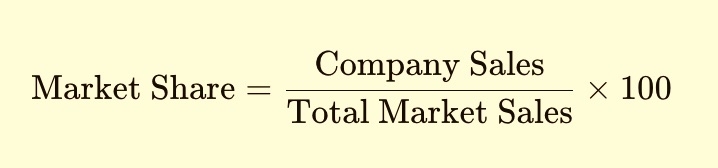
For example, if a winery sells 500,000 bottles annually in a market where total sales amount to 10 million bottles, its market share is 5%.
Market share is an important indicator because it allows companies to evaluate their competitive position, identify opportunities for expansion and measure the effectiveness of marketing strategies.
However, market share should always be interpreted within a clearly defined geographical area, product category and period. A winery may have a small share of the global wine market but a dominant position within a particular local region or premium wine segment.
4.2. Monopolistic competition in the wine market
The wine market can largely be described as an example of monopolistic competition, particularly at the level of brands and individual wineries.
Monopolistic competition is a market structure characterised by:
- A relatively large number of competing producers.
- Product differentiation.
- Limited individual control over market prices.
- Relatively free entry and exit in comparison with highly concentrated industries.
- Competition through quality, branding, reputation and marketing.
Although different wineries may produce similar types of wine, their products are not identical. Differences in grape varieties, geographical origin, production methods, taste, packaging and brand image create opportunities for differentiation.
For example, two wineries may produce Sauvignon Blanc at similar prices, but one may emphasise its organic production methods and regional origin, while the other focuses on modern winemaking techniques and contemporary packaging.
These differences influence consumer perceptions and can allow producers to establish a distinctive market position.
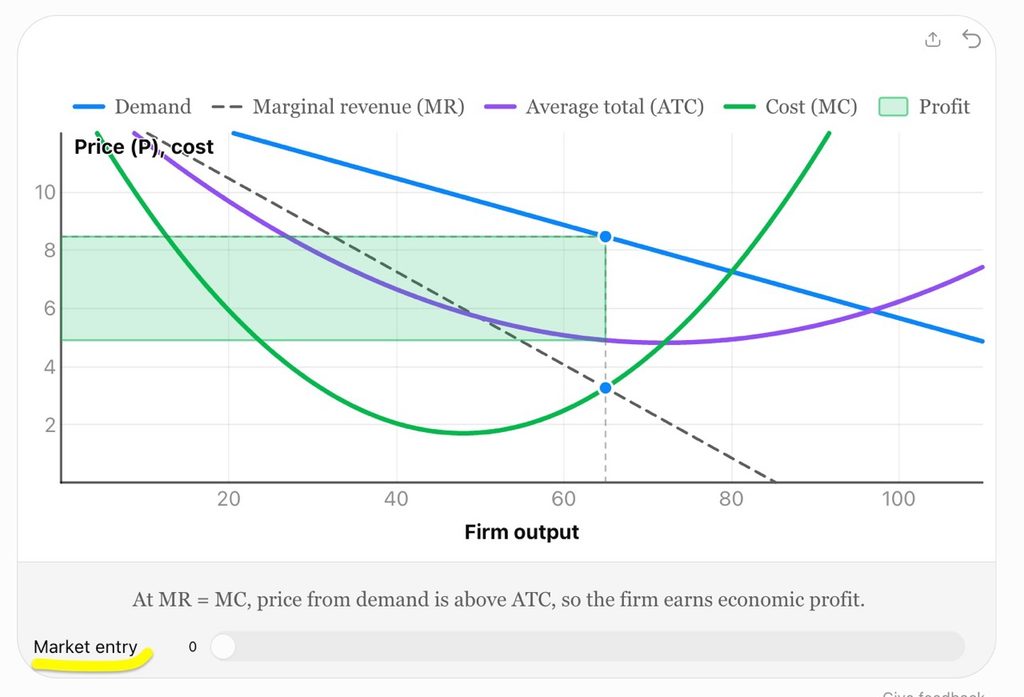
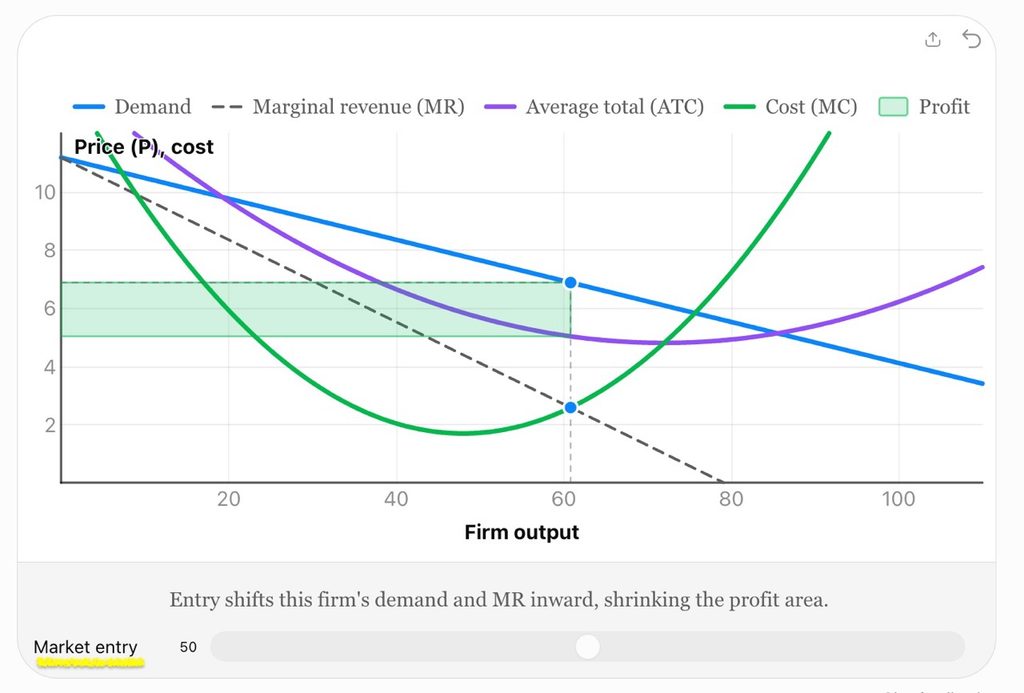
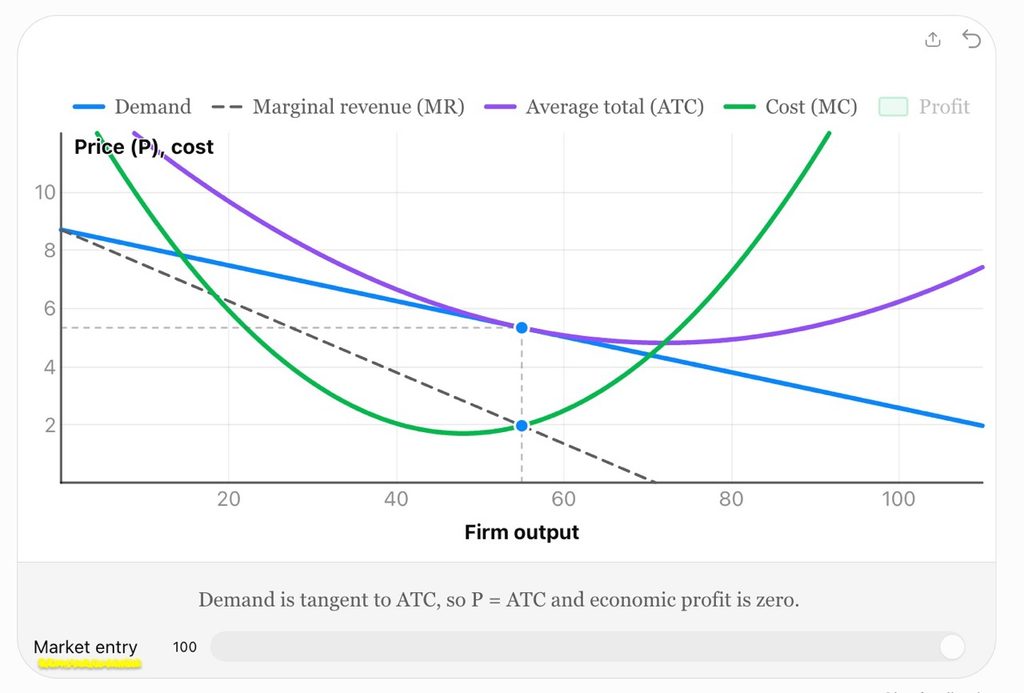
The model also explains why successful differentiation is important. When a winery establishes a strong brand and attracts loyal consumers, it may gain some independence from direct price competition. However, new competitors can enter the market and attract consumers through alternative products, prices or promotional strategies.
4.3. Competition between large and small producers
Large wine companies generally benefit from economies of scale. They can purchase materials in larger quantities, invest in advanced production technologies and distribute their products across numerous markets.
Small and medium-sized wineries often have fewer financial resources but can compete through specialised products, direct customer relationships, limited production, local identity and personalised services.
The competitive environment therefore contains two complementary models:
- Scale-based competition: Companies compete through production efficiency, distribution capacity, broad product portfolios and strong advertising.
- Differentiation-based competition: Producers compete through authenticity, quality, exclusivity, geographical origin and customer experience.
Both models can be successful, depending on the target market and the resources available to the business.
5. Difficulty of Market Penetration and Barriers to Entry
Market penetration refers to the process through which a company enters a particular market and establishes its position among existing competitors.
Entering the wine market can be relatively straightforward in some respects, but establishing a sustainable and profitable business is considerably more difficult.
A new winery must overcome several economic, legal, technical and marketing barriers.
5.1. Financial barriers
Wine production requires considerable initial investment. The costs may include:
- Purchasing or leasing vineyard land.
- Planting and maintaining grapevines.
- Purchasing production equipment.
- Building or renovating winery facilities.
- Purchasing barrels, bottles, labels and packaging materials.
- Hiring qualified employees.
- Financing marketing, distribution and promotional activities.
Furthermore, wine production involves long production cycles. Certain wines require several years of ageing before they can be sold, which creates additional financial pressure and delays the return on investment.
5.2. Regulatory barriers
Wine production and sales are subject to specific national and international regulations. These may concern production standards, geographical indications, labelling, traceability, taxation, food safety, alcohol content and advertising.
Companies wishing to enter foreign markets must also understand import requirements, customs procedures and applicable commercial regulations.
In the European Union, for example, wine producers must comply with relevant agricultural, food safety and labelling legislation.
5.3. Competitive barriers
Established wine brands often have strong reputations, loyal customers and long-term relationships with distributors, restaurants and retailers.
A new producer must invest time and resources in establishing credibility and convincing consumers to try an unfamiliar product.
Competition is particularly challenging in mature markets where consumers already have access to a large number of domestic and imported wines.
5.4. Distribution barriers
Obtaining access to distribution channels is another important challenge. Supermarkets and large retail chains may require suppliers to meet strict commercial conditions, provide sufficient quantities and offer competitive prices.
Restaurants and specialised wine shops may prefer wines from producers with established reputations or products that complement their existing portfolios.
Direct-to-consumer sales can reduce dependence on intermediaries, but they require investment in websites, logistics, customer service and digital marketing.
5.5. Brand recognition and consumer trust
Wine consumers often rely on recommendations, established brands, geographical indications, professional reviews and personal experience when making purchasing decisions.
New producers must therefore develop a recognisable identity and communicate the characteristics that distinguish their products from competitors.
Building consumer trust takes time and requires consistency in product quality, communication and customer service.
Overall, the most important barriers to entering the wine market are financial investment, regulatory requirements, distribution access, established competition and the time required to develop brand recognition.
6. Elements of the Marketing Mix in the Wine Market
The marketing mix is a fundamental concept in marketing management. It refers to the combination of activities and decisions used by a company to promote its products and satisfy consumer needs.
The traditional marketing mix consists of four elements, commonly known as the 4Ps: Product, Price, Place and Promotion.
In the wine industry, these elements are particularly important because purchasing decisions are influenced by both tangible product characteristics and intangible factors such as prestige, tradition, origin and consumer experience.
6.1. Product
The product represents the central element of the marketing mix. In the wine industry, product characteristics include grape variety, colour, aroma, taste, alcohol content, production methods, geographical origin, ageing and packaging.
Producers must determine which characteristics distinguish their wines from competing products.
Product differentiation can be achieved through:
- High-quality grapes and carefully controlled production.
- Organic, biodynamic or sustainable production methods.
- Indigenous grape varieties.
- Distinctive geographical origin.
- Innovative packaging and bottle design.
- Limited editions and special vintages.
- Wine tourism and personalised experiences.
Packaging is particularly important because the bottle, label and visual identity often create the first impression of a product. A well-designed label can communicate the winery’s history, product quality, geographical identity and positioning.
6.2. Price
Price influences both the purchasing decision and the consumer’s perception of quality.
In the wine market, pricing strategies depend on production costs, competition, distribution margins, brand positioning, consumer purchasing power and perceived product value.
Common pricing strategies include:
- Cost-based pricing: Setting prices according to production and operating costs, with an appropriate profit margin.
- Competition-based pricing: Establishing prices in relation to competing products.
- Value-based pricing: Setting prices according to the value consumers associate with the wine.
- Premium pricing: Charging higher prices to communicate exclusivity, quality or prestige.
- Promotional pricing: Offering temporary discounts or special commercial conditions.
An excessively low price may damage the perceived value of a premium wine, while an excessively high price may discourage consumers who do not recognise sufficient added value.
The objective is to establish a price that reflects the product’s positioning while remaining commercially sustainable.
6.3. Place (Distribution)
Place refers to the distribution channels through which wine reaches consumers.
The main distribution channels include:
- Supermarkets and hypermarkets.
- Specialised wine shops.
- Restaurants, hotels and bars.
- Wine distributors and wholesalers.
- Online wine retailers.
- Direct sales through winery websites.
- Winery tasting rooms and cellar-door sales.
- Wine clubs and subscription services.
The choice of distribution channel depends on the winery’s size, target consumers, product positioning and geographical market.
For premium wineries, specialised retailers, restaurants and direct sales may be particularly important because they provide opportunities to communicate product characteristics and offer personalised recommendations.
For larger producers, supermarkets and international distributors may be essential for reaching a wider audience.
6.4. Promotion
Promotion includes all communication activities designed to inform consumers, create interest, encourage purchasing and strengthen brand recognition.
In the wine industry, promotional activities include:
Advertising: Advertising communicates product characteristics and brand identity through appropriate media channels, including print publications, digital platforms, websites and authorised promotional campaigns.
Public relations: PR activities aim to establish and maintain positive relationships with journalists, wine critics, industry organisations, influencers, distributors and the wider public.
Sales promotion: This includes temporary discounts, tasting opportunities, special packages, loyalty programmes and other incentives intended to encourage purchases.
Events: Wine festivals, exhibitions, trade fairs, professional tastings and winery open days provide opportunities to present products and establish relationships with consumers and business partners.
Digital marketing: Websites, social media, newsletters, online publications and search engine optimisation help wineries reach consumers and communicate their identity.
Personal selling: Direct communication between wine producers, sales representatives, sommeliers, retailers and consumers can provide detailed product information and influence purchasing decisions.
Promotional activities should be coordinated to ensure that the brand communicates a consistent message across different channels.
Marketing communications involving alcoholic beverages must also comply with applicable advertising, age-restriction and responsible-marketing requirements in the relevant country.
6.5. The extended marketing mix: People, Process and Physical Evidence
For wineries that provide hospitality and wine tourism services, the traditional 4Ps can be extended to include three additional elements.
- People: Employees, sommeliers, sales representatives and hospitality personnel influence customer satisfaction through their knowledge, professionalism and communication skills.
- Process: The procedures involved in purchasing, ordering, tasting, delivery and customer support should be efficient and consistent.
- Physical Evidence: The winery environment, tasting rooms, packaging, presentation and promotional materials contribute to the customer’s perception of quality.
These elements are particularly relevant for wineries offering guided tours, accommodation, food experiences and wine tastings.
7. Marketing Services and Consumer Satisfaction
Marketing in the wine industry is not limited to selling bottles. It also involves providing services and experiences that contribute to consumer satisfaction and strengthen customer relationships.
Consumer satisfaction refers to the extent to which a product or service meets or exceeds customer expectations.
In the wine market, satisfaction is influenced by several factors:
- Product quality and consistency.
- Taste, aroma and overall drinking experience.
- Price in relation to perceived quality.
- Product availability.
- Packaging and presentation.
- Customer service.
- Delivery reliability.
- Brand reputation.
- Information provided before and after purchase.
A consumer who purchases a wine and receives accurate product information, professional recommendations and reliable service is more likely to develop a positive relationship with the winery.
7.1. Wine tourism as a marketing service
Wine tourism has become an important complementary activity for many wineries. It allows producers to establish direct contact with consumers and communicate the history, identity and production philosophy of their businesses.
Common wine tourism services include:
- Guided vineyard and winery tours.
- Wine tasting sessions.
- Food and wine pairing experiences.
- Educational workshops.
- Wine festivals and cultural events.
- Accommodation and gastronomic services.
- Harvest experiences and seasonal activities.
These services create additional revenue opportunities while strengthening the emotional connection between consumers and wine producers.
7.2. Customer relationship management
Customer relationship management (CRM) involves collecting and analysing customer information to improve communication, service and long-term relationships.
Wineries can use CRM systems to understand purchasing behaviour, maintain customer databases, identify preferences and develop personalised offers.
Examples include sending newsletters about new vintages, informing customers about upcoming events, offering loyalty benefits and providing recommendations based on previous purchases.
The objective is not simply to increase immediate sales but to establish long-term relationships that encourage repeat purchases and positive recommendations.
7.3. Measuring consumer satisfaction
Customer satisfaction can be evaluated through:
- Customer satisfaction surveys.
- Online reviews and ratings.
- Repeat purchase rates.
- Customer retention rates.
- Feedback collected during tastings and events.
- Complaints and product returns.
- Recommendations and referrals.
Regular evaluation allows wineries to identify weaknesses, improve their services and adapt their marketing activities to consumer expectations.
8. Planning of Marketing Activities
Marketing planning is the process of defining marketing objectives, identifying target markets, selecting appropriate strategies and allocating resources to achieve business goals.
For wineries, marketing planning is essential because the wine industry is characterised by seasonal production, changing consumer preferences, strong competition and relatively long product development cycles.
An effective marketing plan should contain several stages.
8.1. Market research and situation analysis
The first step is to analyse the current market environment. This involves collecting information about consumers, competitors, market trends, distribution channels and economic conditions.
A useful analytical tool is the SWOT analysis:
| Strengths | Weaknesses |
|---|---|
| High product quality | Limited financial resources |
| Strong regional identity | Limited distribution |
| Established reputation | Seasonal production |
| Traditional production methods | Low brand awareness |
| Opportunities | Threats |
|---|---|
| Wine tourism development | Increasing competition |
| International market expansion | Climate change |
| Digital sales channels | Declining consumption |
| Sustainable wine production | Rising production costs |
SWOT analysis helps wineries understand their internal capabilities and external challenges.
8.2. Defining marketing objectives
Marketing objectives should be specific, measurable, achievable, relevant and time-bound (SMART).
Examples include:
- Increasing annual wine sales by 10%.
- Entering two new international markets within three years.
- Increasing direct online sales by 15%.
- Improving brand recognition among target consumers.
- Increasing the number of visitors to the winery.
- Establishing partnerships with five new restaurants.
Clearly defined objectives allow businesses to evaluate the effectiveness of their marketing activities.
8.3. Selecting target markets and positioning
After analysing the market, wineries must determine which consumer groups they want to reach.
For example, a small winery producing premium wines may focus on wine enthusiasts, specialised retailers, restaurants and international distributors.
A producer of affordable wines may prioritise supermarkets, larger distribution networks and price-sensitive consumers.
Positioning involves establishing a distinctive place for the product in the minds of consumers. A winery may position itself as a traditional family producer, a premium regional brand, an organic producer or an innovative modern winery.
8.4. Selecting marketing strategies and activities
The next stage involves choosing the appropriate marketing tools.
Activities may include developing a website, participating in wine exhibitions, organising tastings, working with restaurants, creating promotional materials, establishing social media communication and developing partnerships with tourism organisations.
All activities should support the same marketing objectives and communicate a consistent brand identity.
8.5. Budgeting and implementation
A marketing plan must include a realistic budget covering advertising, public relations, events, digital communication, promotional materials, market research and other relevant activities.
Responsibilities and deadlines should also be clearly defined.
8.6. Monitoring and evaluation
The final stage is measuring the results of marketing activities.
Important performance indicators include:
- Sales revenue and sales volume.
- Market share.
- Number of new customers.
- Customer retention.
- Website traffic and online conversions.
- Social media engagement.
- Event attendance.
- Return on marketing investment (ROMI).
Marketing planning should be continuous. Results must be evaluated regularly so that businesses can adjust their strategies when market conditions change.
9. Reputation, Promotion and Communication with Consumers: Tools and Strategies for Effective Marketing
Reputation is one of the most important intangible assets in the wine industry. It influences consumer trust, purchasing decisions, brand recognition and the perceived value of wine.
Unlike many other consumer products, wine often has a strong connection with its geographical origin, producer history and production tradition. Consequently, the reputation of a winery or wine region can significantly influence the commercial success of individual products.
9.1. Building a strong brand reputation
A strong brand reputation is developed over time through consistent product quality, transparent communication and positive customer experiences.
The main elements of reputation management include:
Product consistency: Maintaining stable quality across different vintages helps establish consumer confidence.
Authenticity: Communicating the winery’s history, production methods, geographical origin and values creates a distinctive identity.
Transparency: Providing accurate information about grape varieties, production methods, origin and sustainability practices strengthens credibility.
Customer relationships: Maintaining direct contact with consumers and responding to their feedback helps develop loyalty.
Professional recognition: Awards, wine competitions, professional reviews and recommendations from wine experts can contribute to brand visibility and credibility.
9.2. Digital communication and social media
Digital communication has become an important part of modern wine marketing. Wineries can use digital platforms to present their products, communicate their values and establish direct relationships with consumers.
Important digital marketing tools include:
- Official websites containing product information and online purchasing options.
- Social media platforms such as Instagram, Facebook and YouTube.
- Email newsletters and customer databases.
- Search engine optimisation (SEO).
- Online advertising, where legally permitted.
- Digital wine catalogues and educational content.
- Virtual tastings and online events.
Social media is particularly useful for communicating visual aspects of wine production, including vineyards, harvesting, cellar activities, wine tasting and food pairing.
However, successful digital marketing requires consistent communication and relevant content. Simply publishing product advertisements is unlikely to establish a strong and lasting relationship with consumers.
9.3. Public relations and media relations
Public relations activities help wineries develop relationships with journalists, wine writers, critics, tourism organisations, professional associations and other relevant stakeholders.
Examples include organising press tastings, inviting journalists to visit wineries, preparing press releases, participating in interviews and presenting new vintages.
Positive media coverage can increase brand visibility and strengthen consumer confidence.
9.4. Events and direct communication
Events provide opportunities for personal communication and product presentation.
Wine exhibitions, wine festivals, professional tastings, regional celebrations and winery open days allow producers to interact directly with consumers and business partners.
These activities are particularly important for smaller wineries that may not have the financial resources to compete with large companies through traditional advertising.
9.5. Storytelling as a marketing strategy
Storytelling is an effective communication technique in the wine industry because consumers frequently associate wine with history, culture, tradition and personal experiences.
A winery can communicate its identity through stories about its founders, vineyard location, grape varieties, production philosophy, family traditions and relationship with the local community.
Such communication helps transform wine from an ordinary consumer product into a product with a recognisable identity and emotional value.
The most effective reputation and communication strategies combine product quality, authentic storytelling, professional relationships, customer service and consistent digital communication.
10. Trends in the Wine Market and Related Activities
The wine market is undergoing significant structural changes. Economic developments, demographic shifts, technological innovation, environmental challenges and changing consumer preferences are influencing both production and marketing strategies.
According to the OIV’s report on the state of the world wine sector in 2025, published in May 2026, global wine production reached approximately 227 million hectolitres, while consumption declined to approximately 208 million hectolitres. Global wine consumption decreased by 2.7% compared with 2024. International wine exports also declined, reaching approximately 94.8 million hectolitres in volume and €33.8 billion in value. These figures demonstrate the need for wine businesses to adapt to a changing market environment. OIV+1
The following trends are particularly relevant.
10.1. Changing consumer preferences
Consumer preferences are evolving, particularly among younger adult generations.
Traditional wine consumption patterns are changing as consumers increasingly seek products that correspond to their lifestyles, purchasing power and personal values.
Some consumers prefer lighter wines, sparkling wines, fresh aromatic varieties and products suitable for informal social occasions.
At the same time, consumers increasingly expect clear product information, attractive packaging and convenient purchasing opportunities.
For wineries, this creates opportunities to develop new product categories and communicate with different consumer segments.
10.2. Low-alcohol and alcohol-free wines
One important emerging trend is the development of low-alcohol and alcohol-free wine products.
These products respond to growing interest in moderation and alternative drinking occasions.
Producers are investing in technologies that allow them to reduce or remove alcohol while attempting to preserve the sensory characteristics of wine.
Although this category remains relatively small compared with conventional wine, it represents an area of product innovation and potential market development.
10.3. Organic and sustainable wine production
Environmental sustainability has become an important consideration in the wine industry.
Climate change, water availability, soil degradation and biodiversity loss affect vineyard management and production.
Many wineries are adopting more sustainable practices, including:
- Organic and biodynamic viticulture.
- Reduced pesticide use.
- Efficient water management.
- Renewable energy.
- Sustainable packaging.
- Lightweight bottles.
- Recycling and waste reduction.
- Protection of biodiversity.
Sustainability can also become an important marketing element, provided that environmental claims are accurate, transparent and supported by evidence.
10.4. Digitalisation and e-commerce
Digitalisation is changing the way wine producers communicate with consumers and distribute their products.
Online wine shops, direct-to-consumer sales, digital payment systems and customer relationship management software allow wineries to reach consumers beyond their geographical areas.
Digital tools also provide opportunities to collect information about purchasing behaviour and evaluate the effectiveness of promotional activities.
QR codes on wine labels can provide access to information about the winery, production methods, origin and product characteristics.
10.5. Wine tourism and experiential marketing
Wine tourism continues to represent an important opportunity for wineries and wine-producing regions.
Consumers increasingly seek experiences that combine wine tasting, gastronomy, culture, accommodation and local tourism.
Wineries can develop additional revenue sources by offering guided tours, tasting programmes, food pairing, educational workshops and seasonal events.
Experiential marketing is particularly valuable because it allows consumers to experience the brand directly rather than relying exclusively on traditional advertising.
10.6. Premiumisation and product differentiation
Although purchasing power and price sensitivity remain important, some consumer segments continue to show interest in premium and distinctive wines.
Premiumisation refers to the development and marketing of higher-value products that offer additional perceived benefits, such as recognised origin, production quality, exclusivity and brand reputation.
For smaller wineries, product differentiation can be more effective than competing directly with large producers on price.
10.7. Climate change and adaptation
Climate change is one of the most significant long-term challenges facing wine producers.
Increasing temperatures, drought, irregular rainfall, frost and extreme weather events influence grape quality, production volumes and harvest timing.
The OIV reported that the global vineyard area declined to approximately 7 million hectares in 2025, marking the sixth consecutive year of contraction. Climate variability and adjustments to production capacity were among the factors influencing this development. OIV+1
Wineries must increasingly invest in climate adaptation measures, including selecting suitable grape varieties, improving vineyard management, managing water resources and exploring alternative cultivation techniques.
These developments also influence marketing because consumers may become more interested in the environmental responsibility and resilience of wine producers.
10.8. Internationalisation and new markets
International trade remains an important component of the wine industry. However, producers face changing demand, trade restrictions, transportation costs and increased competition.
The development of new markets requires an understanding of local consumer preferences, legal requirements, distribution systems and cultural differences.
Producers must therefore adapt their product positioning and communication strategies to individual markets rather than relying on identical promotional approaches everywhere.
10.9. Artificial intelligence and marketing technology
Artificial intelligence and data analytics are creating new possibilities for wine businesses.
Potential applications include:
- Analysing consumer preferences and purchasing patterns.
- Personalising product recommendations.
- Improving customer service.
- Forecasting demand.
- Optimising inventory management.
- Evaluating marketing campaign performance.
- Developing targeted communication.
These technologies can help wineries make more informed business decisions and improve operational efficiency.
Nevertheless, technology should support rather than replace the quality, authenticity and personal relationships that are central to the wine industry.
Conclusion
Marketing and sales are essential elements of the modern wine industry. The wine market is a complex and competitive environment in which agricultural production, economic conditions, consumer preferences, cultural identity and international trade interact.
The analysis demonstrates that the wine market is characterised by considerable product differentiation, a combination of large international producers and small independent wineries, and a predominantly competitive structure in which branding, reputation and perceived quality play important roles.
Although market entry is possible for new producers, establishing a sustainable business requires significant investment, regulatory knowledge, distribution access and effective marketing activities.
The marketing mix provides a framework for managing the commercial activities of wineries. Product quality, appropriate pricing, efficient distribution and effective promotion must work together to establish a competitive market position.
At the same time, consumer satisfaction and reputation are increasingly important. Wineries must provide not only high-quality products but also reliable services, relevant information and positive consumer experiences. Wine tourism, direct sales and customer relationship management offer additional opportunities to strengthen customer loyalty.
Finally, the wine industry must respond to major developments such as changing consumption patterns, sustainability, digitalisation, climate change, international competition and the growing interest in alternative wine products.
In conclusion, the long-term success of wine businesses depends on their ability to combine traditional production values with modern marketing practices. Wineries that understand their consumers, differentiate their products, communicate their identity effectively and adapt to market changes will be better positioned to maintain competitiveness and achieve sustainable development.
References and recommended literature
The following sources can be used to support the article, expand the analysis and prepare an academic bibliography.
1. International Organisation of Vine and Wine (OIV). (2026). State of the World Vine and Wine Sector in 2025. Official international statistics on production, consumption, vineyard areas and international trade. OIV – State of the World Wine Sector 2025.
2. International Organisation of Vine and Wine (OIV). (2025). State of the World Vine and Wine Sector in 2024. Statistical overview of the global wine industry. OIV – 2024 Report.
3. Kotler, P., Keller, K. L., and Chernev, A. Marketing Management. Pearson. A fundamental reference for marketing principles, segmentation, positioning and the marketing mix.
4. Kotler, P., Armstrong, G., and Balasubramanian, S. Principles of Marketing. Pearson. Useful for understanding consumer behaviour, market research and marketing planning.
5. Wine Australia. Global Supply Monitor. Research and market information concerning wine production, consumption and international supply. Wine Australia – Global Supply Monitor.
6. Grand View Research. Wine Market Size, Share and Trends Analysis. Industry research concerning market segmentation, distribution channels and competitive developments. Wine Market Research.
7. ProWein. (2026). Beyond Volume – ProWein Business Report. Analysis of changing wine market conditions and business strategies. ProWein Business Report 2026.
The article is written as a general overview of the international wine market, with particular relevance to European wine producers. It can serve as a foundation for a university paper, professional report or educational publication.